



What is Root Canal Treatment?
What is Root Canal Treatment?
Root canal treatment is a procedure aimed at saving a tooth by cleaning and filling the infected nerves and tissues inside the tooth.
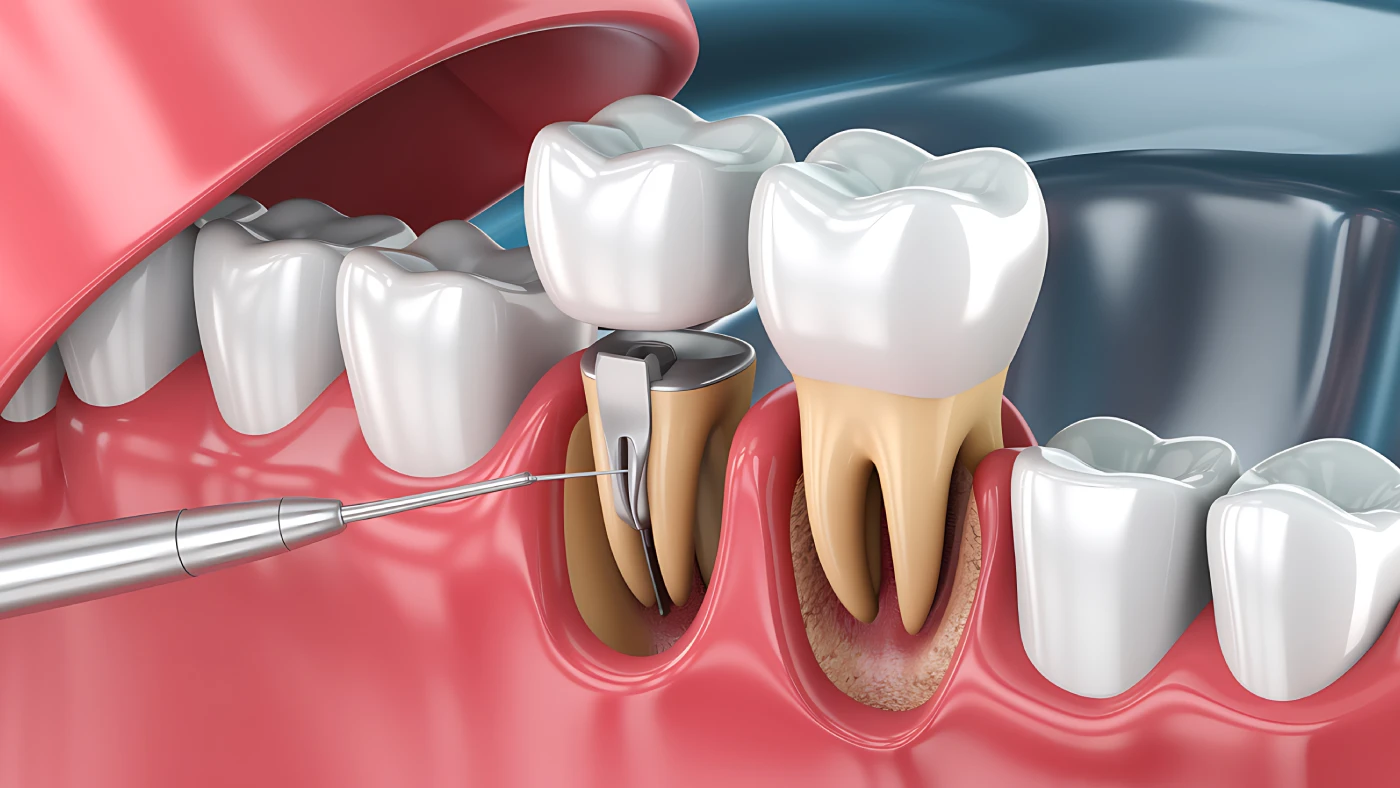
This procedure typically helps to treat a tooth that has been damaged due to deep decay, trauma, or infection, without the need for extraction. First, local anesthesia is applied, and the infected pulp tissue inside the tooth is cleaned. Then, the canals are shaped, disinfected, and sealed with special filling materials. In the final step, a filling or crown is placed on the tooth. Root canal treatment relieves pain and preserves the tooth’s function.
When is Root Canal Treatment Needed?
Root canal treatment is necessary when there are symptoms such as severe tooth pain, sensitivity to hot and cold, discomfort while chewing, tooth discoloration, or swelling in the gums. These issues typically arise due to deep cavities, trauma to the tooth, infection under old fillings, or cracks in the tooth.
If left untreated, the infection may spread to surrounding tissues, leading to serious issues like gum abscesses or bone loss. Early diagnosis is therefore very important.
As a result, root canal treatment is an effective procedure that saves the tooth from extraction, alleviates pain, and ensures long-term oral health.
How is Root Canal Treatment Performed?
First, local anesthesia is applied to numb the area completely. The dentist then cleans the decay and creates a small hole to reach the pulp chamber. Using special tools, the infected nerve tissue inside the root canals is removed. The canals are then washed and cleaned with disinfectant solutions. Afterward, these spaces are filled tightly with a biocompatible filling material. Finally, the top of the tooth is sealed with a permanent filling or crown.
How Many Sessions Does it Take?
Root canal treatment is usually completed in 1 to 2 sessions, depending on the condition of the tooth and the extent of the infection. In the first session, the infected tissues are cleaned, the canals are shaped, and a temporary filling is placed. If the infection is widespread, antibiotic treatment may be needed, and additional sessions may be planned. In the second session, the canals are sealed with permanent filling, and a filling or crown is placed on the tooth. With advanced technology and early intervention, most root canal treatments can be completed in a single session.
However, in more advanced cases, the procedure may extend over a few days. The treatment process is painless, and the success rate is very high. A follow-up session is usually scheduled a few weeks after the procedure.
Will There Be Pain After the Procedure?
Generally, it is normal to experience mild pain or sensitivity for the first few days after root canal treatment. This is a temporary condition caused by the healing response of the tissues in the area. The pain is usually felt when pressure is applied, rather than as throbbing. Your dentist will recommend simple pain relievers to help you manage this process comfortably. This mild discomfort typically reduces within one to two days. If the pain is very severe or increases over time, this is not normal. In such a case, you should contact your dentist immediately.
Does Root Canal Treatment Save the Tooth?
Yes, root canal treatment is the most effective method for saving a tooth. The primary goal of this treatment is to preserve an infected or dead tooth rather than extract it. During the procedure, the infected nerve tissue (pulp) inside the tooth is removed. This prevents the infection from spreading to the jawbone. Once the root canals are cleaned, the tooth retains its function. It may lose its vitality, but it will continue to perform its chewing function. The tooth, restored with a filling or crown, can be used healthily for many years.
What Happens If Root Canal Treatment Is Not Done?
If root canal treatment is not done, the infection in the tooth root spreads and can lead to tooth loss. Untreated infected nerve tissue progresses from the root tip into the jawbone. This causes painful swelling, known as an abscess. An abscess can lead to severe pain and swelling in the face. The infection does not stay in that tooth alone. It erodes the jawbone and may damage adjacent teeth. Even worse, the infection can enter the bloodstream, causing serious systemic health problems. At this stage, the tooth cannot be saved. As a result, the only solution is to extract the tooth.
What to Do After Root Canal Treatment?
It is normal to experience mild sensitivity for the first few days. During this period, avoid hard foods, and if possible, refrain from chewing with the treated tooth. Choosing soft foods until the sensitivity decreases helps protect the tooth.
Oral hygiene should be maintained regularly. Brushing and flossing help reduce the risk of infection. However, be gentle when brushing the treated area.
Regular dental check-ups should not be neglected. If necessary, a filling or crown may be placed on the tooth that has undergone root canal treatment. This strengthens the tooth and eliminates the risk of fracture.
If pain or swelling persists after the treatment, be sure to consult your dentist. These symptoms may indicate that the infection inside the canal has not been fully cleaned or that there is inflammation in the surrounding tissues.
Signs of Failed Root Canal Treatment
The most common complaint of failed root canal treatment is persistent or recurring pain after the procedure.
In addition to pain, sensitivity during chewing, throbbing in the tooth, swelling, discharge, color change, and bad odor are other notable symptoms. In some cases, an abscess-like pimple may form on the gums. An X-ray may show inflammation or a space at the root tip. These conditions can occur due to incomplete cleaning of the canal, insufficient filling, or the development of a new infection. In failed root canal cases, retreatment or surgical intervention may be necessary.